




The Justin Sun Prize
× MathDB
The Justin Sun Prize
× MathDB
The Justin Sun Prize
× MathDB
Promoting progress in mathematics by recognizing outstanding solutions,
formalizations and expositions.
Promoting progress in mathematics by
recognizing outstanding solutions,
formalizations and expositions.
Promoting progress in mathematics by recognizing
outstanding solutions, formalizations and expositions.
Advancing Mathematical Discovery Through Open Collaboration
ADVANCING MATHEMATICAL DISCOVERY THROUGH OPEN COLLABORATION
Advancing Mathematical Discovery Through Open Collaboration
The Justin Sun Prize × MathDB
The Justin Sun Prize × MathDB
The Justin Sun Prize and MathDB are partnering on a pilot initiative to support progress on open mathematical problems, with dedicated awards for mathematical solutions, formal verification, and accessible explanations.
The Justin Sun Prize recognizes mathematical breakthroughs and machine-verifiable proofs, welcoming contributions from researchers, independent contributors, and human–AI teams. MathDB, led by Caltech Professor Tony Yue Yu, is a large-scale community database of definitions, theorems, conjectures and open problems in mathematics, tracking the latest breakthroughs, and providing a new platform for research and collaboration.
Through this collaboration, the Justin Sun Prize will fund awards for selected problems on MathDB. MathDB will support problem curation, Lean formalization, submission and evaluation.
For each participating problem, awards will be allocated across three types of contribution:
50% Mathematical solution: The individual or team that first solves the problem.
30% Lean formalization: The individual or team that completes the Lean formalization of the corresponding solution.
20% Exposition: An engaging exposition of the problem and the solution, including an essay and a video.
By rewarding accepted solutions, verified formalizations and engaging expositions, the collaboration aims to inspire new mathematical discoveries, strengthen foundations, and share the beauty of mathematics with a broader audience.
how to Contribute
More Information
Discover our pilot collaboration and learn how to contribute.
Discover our pilot collaboration and learn how to contribute.
01
Pilot Program Prize Pool
02
Prize Allocation
03
Submission and Verification
04
About MathDB
Pilot Program Prize Pool
Through this collaboration, The Justin Sun Prize will fund awards for selected problems on MathDB. There are 4 prize tiers covering 50 problems.
Pinnacle Problems (7 questions): $1,000,000 per question
Tier 1 (8 questions): up to $65,537 per question
Tier 2 (9 questions): up to $5,040 per question
Tier 3 (26 questions): up to $1,729 per question
01
02
03
04
Pilot Program Prize Pool
Through this collaboration, The Justin Sun Prize will fund awards for selected problems on MathDB. There are 4 prize tiers covering 50 problems.
Pinnacle Problems (7 questions): $1,000,000 per question
Tier 1 (8 questions): up to $65,537 per question
Tier 2 (9 questions): up to $5,040 per question
Tier 3 (26 questions): up to $1,729 per question
MathDB Lead & Academic Advisor
MathDB Lead & Academic Advisor


Professor of Mathematics at Caltech
Professor of Mathematics at Caltech
The Justin Sun Prize x MathDB Pinnacle Tier Problems
Discover some of the world's most challenging mathematical problems, each offering a USD 1 million prize for a successful solution.

Riemann hypothesis
Riemann hypothesis
Do all nontrivial zeros of the Riemann zeta function have real part one half? This determines how tightly errors in prime distribution can be bounded.
Do all nontrivial zeros of the Riemann zeta function have real part one half? This determines how tightly errors in prime distribution can be bounded.

P versus NP problem
P versus NP problem
If a proposed solution can be verified in polynomial time, can a solution also always be found in polynomial time?
If a proposed solution can be verified in polynomial time, can a solution also always be found in polynomial time?
Birch and Swinnerton-Dyer conjecture
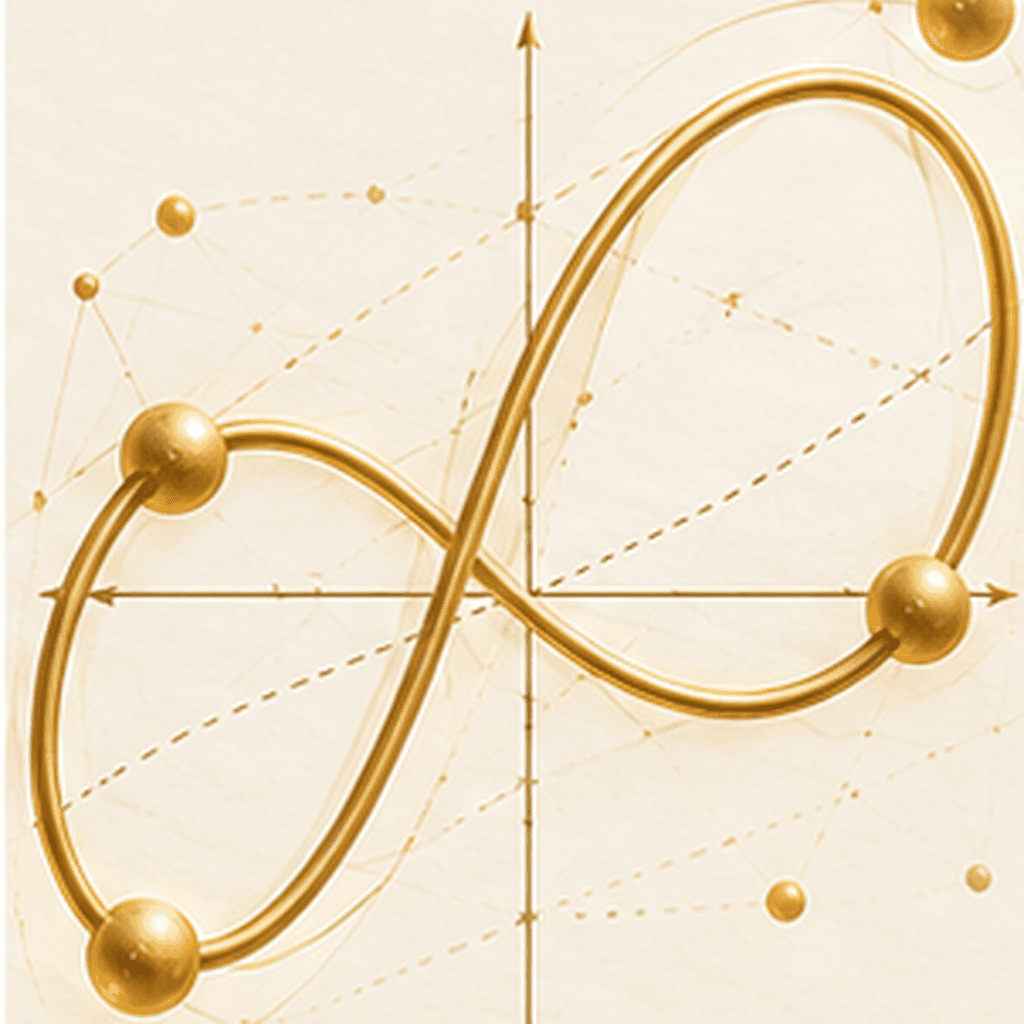
Birch and Swinnerton-Dyer conjecture
Does the rank of an elliptic curve's rational-point group equal the order of vanishing of its L-function at one? The strong form also predicts the leading coefficient.
Does the rank of an elliptic curve's rational-point group equal the order of vanishing of its L-function at one? The strong form also predicts the leading coefficient.
Hodge conjecture
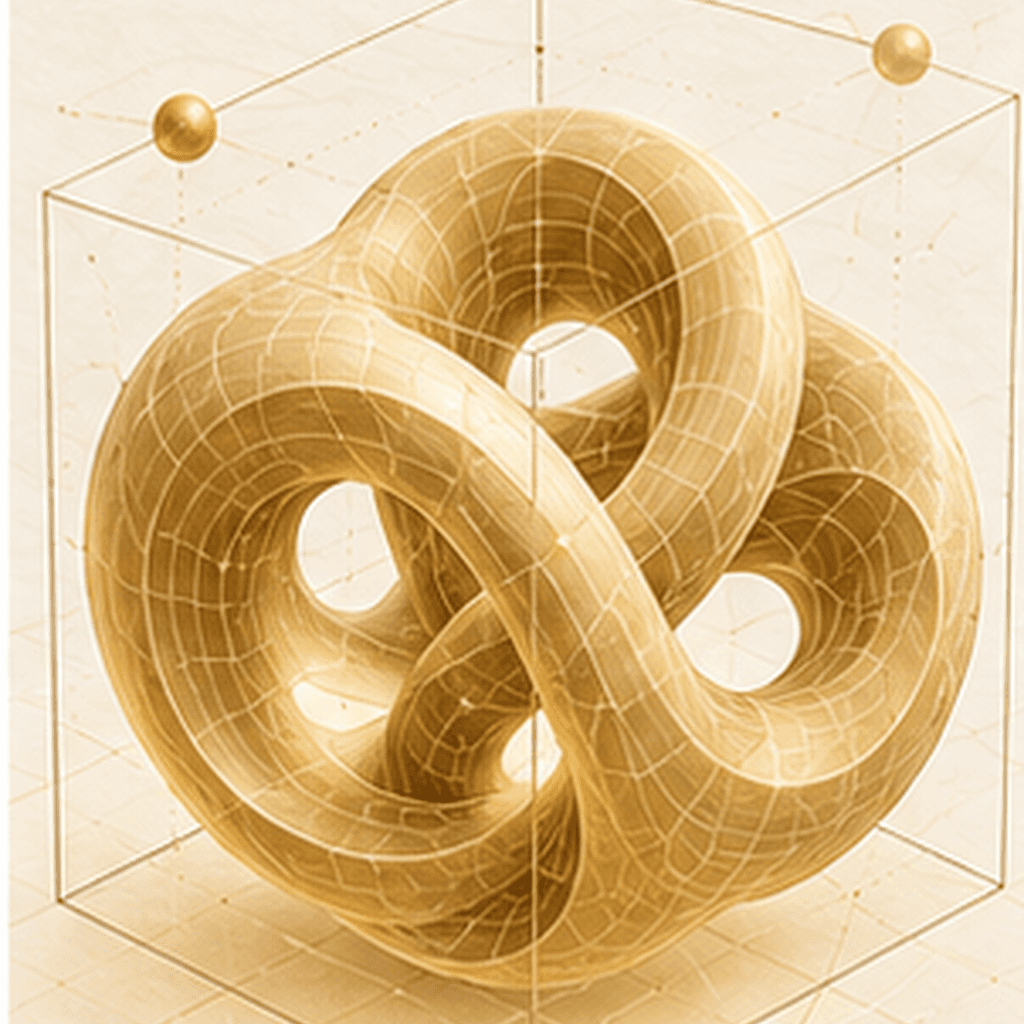
Hodge conjecture
On a smooth complex projective variety, is every rational Hodge class of equal bidegree a rational linear combination of classes of algebraic subvarieties?
On a smooth complex projective variety, is every rational Hodge class of equal bidegree a rational linear combination of classes of algebraic subvarieties?

Navier–Stokes existence and smoothness
Navier–Stokes existence and smoothness
For three-dimensional incompressible viscous flow, do smooth initial data always yield globally smooth solutions, or can finite-time singularities be constructed under the official conditions?
For three-dimensional incompressible viscous flow, do smooth initial data always yield globally smooth solutions, or can finite-time singularities be constructed under the official conditions?

Yang–Mills existence and mass gap
Yang–Mills existence and mass gap
Construct a nontrivial quantum Yang–Mills theory rigorously in four dimensions and prove a positive energy gap between the vacuum and the lowest nonzero excitation.
Construct a nontrivial quantum Yang–Mills theory rigorously in four dimensions and prove a positive energy gap between the vacuum and the lowest nonzero excitation.

Global Langlands Functoriality Conjecture
Global Langlands Functoriality Conjecture
The global Langlands conjecture predicts a correspondence between automorphic forms and Galois representations over global fields, linking arithmetic structures through matching L-functions.
The global Langlands conjecture predicts a correspondence between automorphic forms and Galois representations over global fields, linking arithmetic structures through matching L-functions.
© 2026 H.E. Justin Sun. All rights reserved.
© 2026 H.E. Justin Sun. All rights reserved.
© 2026 H.E. Justin Sun. All rights reserved.